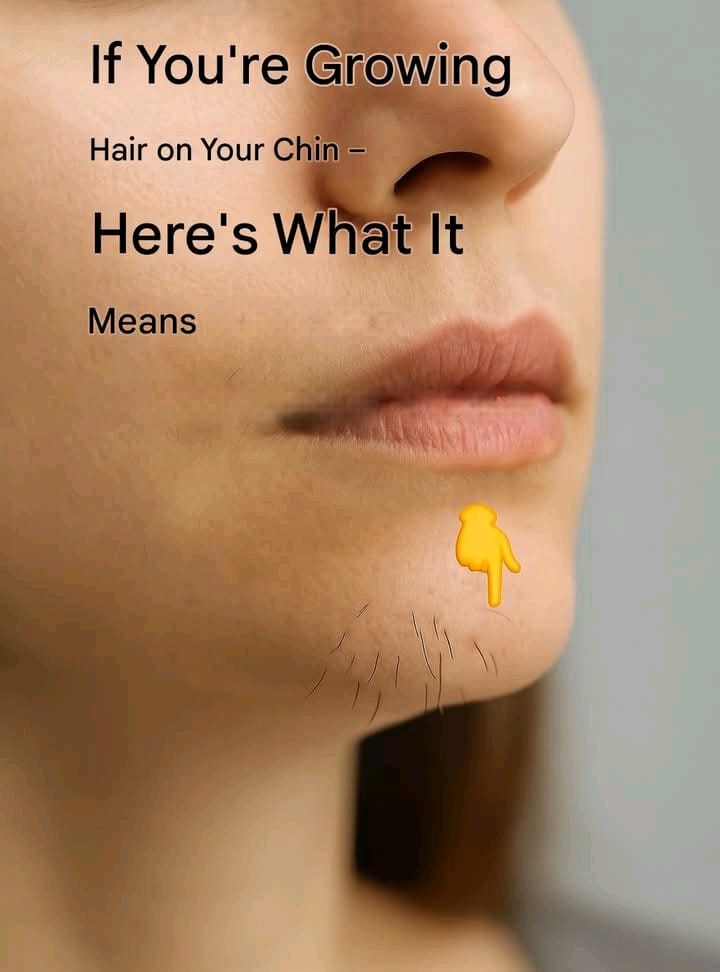
If dark hairs appear on your chin, this may be a sign that you are …see more
While some remove them for personal or aesthetic reasons, others choose to embrace them as part of natural aging or hormonal shifts.
Let’s explore the real causes behind chin whiskers, when they might signal an underlying condition, and how to manage them — gently, safely, and with confidence.
Because real beauty isn’t about perfection. It’s about understanding your body and making choices that feel right for you.
 Why Do Women Get Chin Whiskers?
Hair growth is influenced by hormones, genetics, age, and overall health. Here are the most common reasons women develop chin whiskers
1. Aging & Menopause
- As estrogen levels decline during perimenopause and menopause, the balance shifts toward testosterone
- This can lead to coarser, darker hairs on the chin, neck, or upper lip
 Affects up to 30% of women over 50
2. Hormonal Changes (Even Before Menopause)
- Fluctuations during menstrual cycles, pregnancy, or after stopping birth control can temporarily affect hair growth
- Some women notice new hairs after childbirth or stress-related hormone shifts
3. Genetics
- If your mother or grandmother had facial hair, you may be more likely to as well
- Ethnic background also plays a role — women of Mediterranean, South Asian, or Middle Eastern descent often have more visible facial hair naturally
4. Polycystic Ovary Syndrome (PCOS)
- A hormonal disorder affecting ~6–12% of women of reproductive age
- Can cause excess androgen (male hormone) production, leading to:
- Irregular periods
- Acne
- Weight gain
- Increased facial or body hair (hirsutism)
 If you have other symptoms, talk to your doctor — PCOS is manageable with lifestyle and medical support.
5. Insulin Resistance & Metabolic Health
- Linked to PCOS and can worsen hormonal imbalances
- Improving insulin sensitivity through diet, exercise, and weight management may reduce unwanted hair growth over time
When to See a Doctor
While occasional chin hairs are normal, consult a healthcare provider if you notice:
 Sudden increase in facial hair Sudden increase in facial hair | Could indicate hormonal imbalance |
| Hair growth on chest, abdomen, or back | May be hirsutism linked to PCOS or adrenal issues |
| Irregular or missed periods | Hormonal red flag |
| Acne, thinning hair on scalp, or weight gain | Common signs of PCOS |
 Blood tests (for testosterone, thyroid, insulin, etc.) can help identify treatable causes.
 Safe & Effective Ways to Manage Chin Whiskers
There’s no “right” way to handle facial hair — only what feels comfortable for you.
Here are safe options, from temporary to long-term:
 Tip: Always clean the area before and after hair removal to prevent infection.
 Debunking the Myths
| “Shaving makes hair grow back darker” | False — it looks stubbier because it’s cut bluntly |
| “Only older women get chin hairs” | No — teens and young adults can too, especially with PCOS |
| “Facial hair means poor hygiene” | Completely false — it’s hormonal, not dirty |
| “You must remove them” | Not true — many women proudly let them grow |
 Emotional Impact & Body Acceptance
For some, chin whiskers bring frustration. For others, they’re just part of life.
But societal pressure around smooth, hairless skin can make this a sensitive topic
Remember:
You don’t owe anyone smooth skin. Your worth isn’t tied to hair removal. Whether you pluck, laser, or leave them be — it’s your choice.
And that kind of autonomy? That’s powerful.
Final Thoughts
Your body changes over time — and that’s okay.
Whether your chin whiskers are a sign of aging, hormones, or heritage…
they don’t define you.
So take care of yourself — not out of shame, but out of respect.
Talk to your doctor if something feels off. Explore safe removal methods if you want to. Or simply let them be.
Because real confidence isn’t found in flawless skin.



0 Comments